
New European AI assistant to make patient experiences actionable for care and health systems
12 Nov 2026
The European Organisation for Research and Treatment of Cancer (EORTC) is pleased to announce the launch in October 2026 of the Horizon Europe project ResPECT, which aims to connect patient voices, clinical decision support and health system intelligence across Europe
Millions of people living with breast cancer or depression experience physical, psychological, social and financial burdens that remain unseen or insufficiently addressed in routine care. Existing patient-reported outcome measures provide important information, but they often reduce complex experiences to numerical scores. At the same time, healthcare professionals face fragmented clinical data, increasing documentation demands and digital tools that are not always well integrated into care.
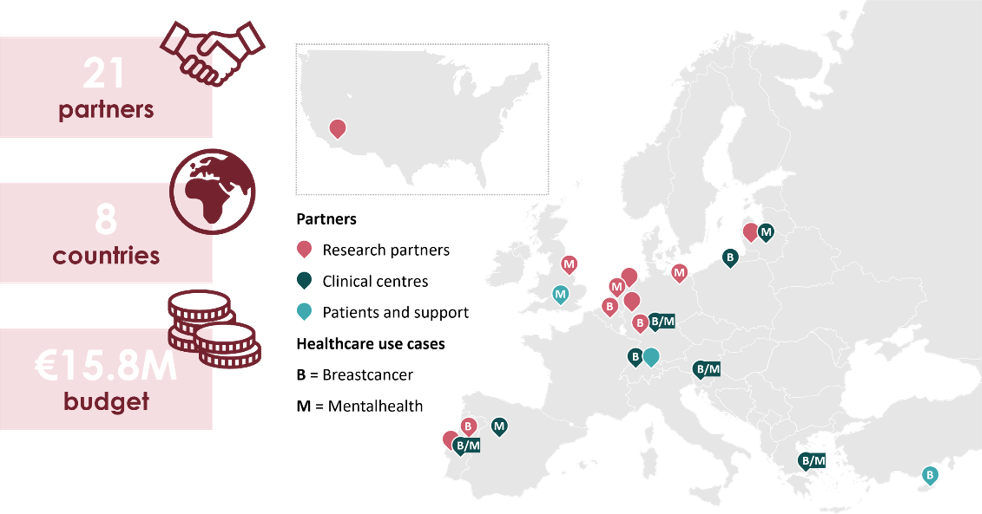
The new European research and innovation project ResPECT, Generative AI Assistant: A Paradigm Shift in Burden Assessment for Cancer and Mental Health Care, aims to change this. Funded under Horizon Europe’s GenAI4EU call for end user-driven applications of generative AI models in healthcare, the four-year project brings together 22 partners and will conduct clinical evaluation across eight European countries. ResPECT aims to develop a trustworthy, multilingual and GDPR-compliant Virtual Assistant consisting of two parts: a medical assistant aiming to support patients and medical professionals, and a policy assistant to support policy makers and health systems.
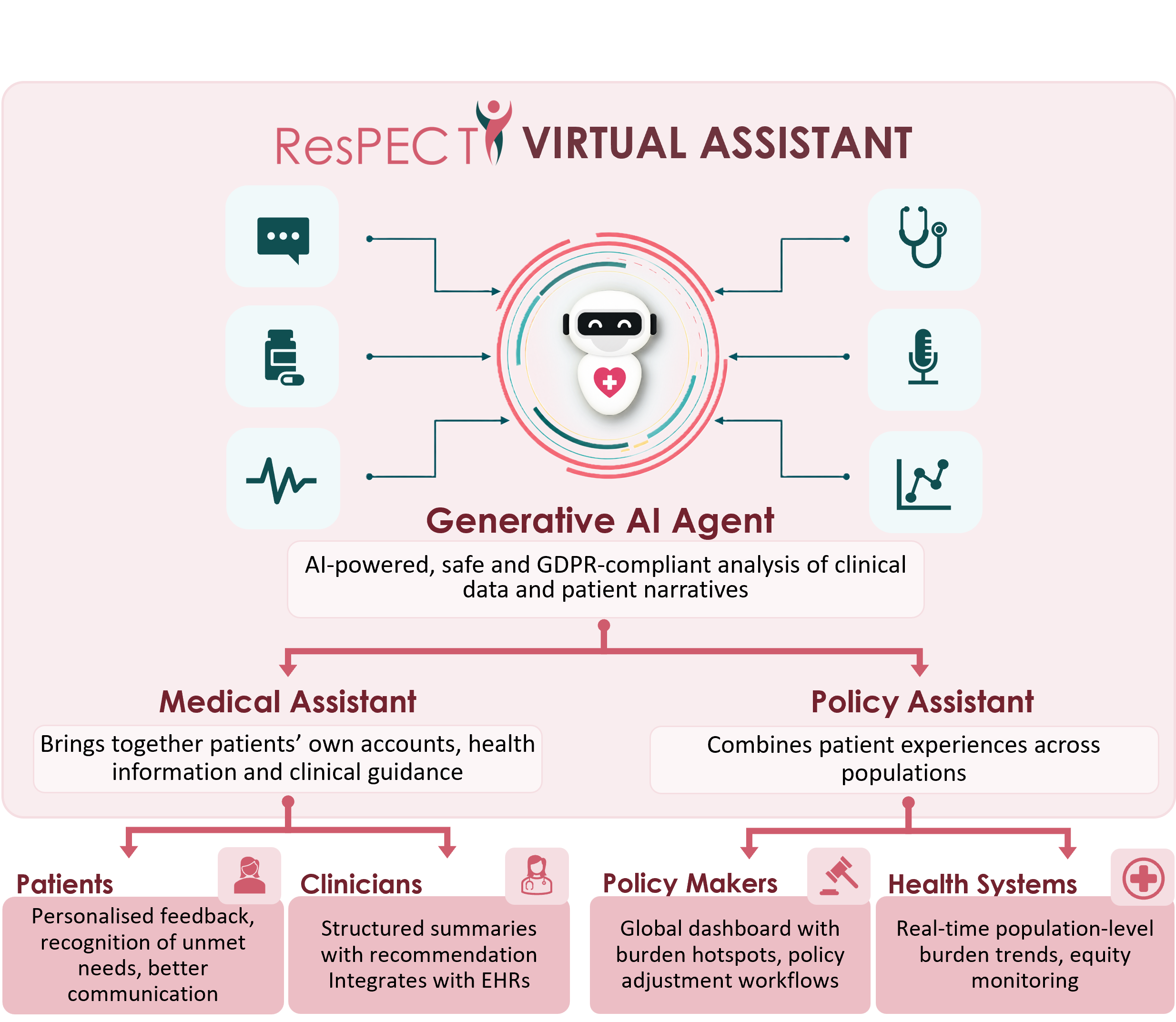
The Medical Assistant will support individual care by combining patient-reported experiences with relevant clinical information and guideline-based knowledge. It aims to help patients describe their symptoms, concerns and needs in their own words, while providing healthcare professionals with concise, structured and clinically relevant summaries. It will reduce documentation and cognitive burden of health care professionals while supporting timely, evidence-based care for patients. The project will evaluate the solution in a multicentre randomised controlled trial involving patients with early-stage breast cancer or moderate-to-severe depression.
The Policy Assistant will focus on the health-system level. By aggregating structured information on patient experiences across populations, it aims to help identify unmet needs, burden patterns and potential gaps in care.
Equity-sensitive dashboards will support comparisons across regions, patient groups and healthcare systems, thereby informing benchmarking, resource allocation and more responsive health policy strategies across Europe.
The project is coordinated by Ruprecht Karl University Heidelberg. The consortium combines leading clinical centres, AI and digital health specialists, patient organisations, health economists, policy experts and internationally recognised methodological leaders. Its experts include the co-chairs of the Lancet Commission on Cancer and Health Systems, and Mental Health Effects of the COVID-19 Pandemic.

“With ResPECT, we want to make patients’ lived experiences actionable for better care and smarter health systems across Europe.”
André Pfob,
ResPECT Project Coordinator
Ruprecht Karl University Heidelberg & Heidelberg University Hospital, Germany
Among the partners contributing to ResPECT is EORTC, which brings longstanding expertise in clinical research and the integration of the patient perspective into cancer care.
EORTC is a leading independent, non-profit cancer research organisation dedicated to improving survival and quality of life for people with cancer through high-quality clinical research and international collaboration. Drawing on decades of expertise in incorporating the patient perspective into cancer research and care, including through the development and use of patient-reported outcome measures, EORTC contributes to the ResPECT project by bringing its expertise in capturing patients’ lived experience effectively and translating it into reliable, actionable information. Through its involvement in the consortium, EORTC supports the development of innovative approaches that can inform clinical decision-making, research and health policy across Europe.
ResPECT is also part of the GenAI4Health Cluster, which brings together European initiatives working on the responsible use of generative AI in medicine and healthcare. Through this collaboration, the project will contribute to broader European efforts to connect technical innovation, clinical implementation, patient-centred care, ethics, data protection and regulatory requirements.
By listening to patients’ experiences in their own words, rather than reducing them to tick-box surveys, ResPECT aims to capture the full breadth of what people are living through. The project hopes to turn these voices into clear, actionable insights for healthcare professionals and comparable evidence for policymakers, helping to shape more responsive, efficient and sustainable health systems across Europe.
More information on respect-care.eu
Follow us on LinkedIn
Contact
Caroline Hance (EORTC QLG Communications)
caroline.hance@eortc.org
Related News
First site activated in EORTC STARBURST-1, the research project on muscle-invasive bladder cancer
28 Oct 2026
EORTC at ESMO 2026: New findings and ongoing studies
27 Oct 2026
EORTC research presented at ESMO 2026
22 Oct 2026
EORTC at the forefront of quality of life research at ISOQOL 2026
21 Oct 2026
EORTC Quality of Life Group at ISOQOL 2026
15 Oct 2026
Pink October 2026: Advancing breast cancer research, together
7 Oct 2026
Beyond survival: new CSO and EORTC recommendations call for better reporting of quality of life in adjuvant cancer trials
30 Sep 2026
EORTC presents new results in neuro-oncology at EANO
28 Sep 2026
EORTC Celebrates 10 Years of World Cancer Research Day with Her Majesty Queen Letizia of Spain and Her Royal Highness Princess Dina Mired of Jordan
23 Sep 2026
In Memoriam: Neil Aaronson, founding member of the EORTC Quality of Life Group
7 Sep 2026
