
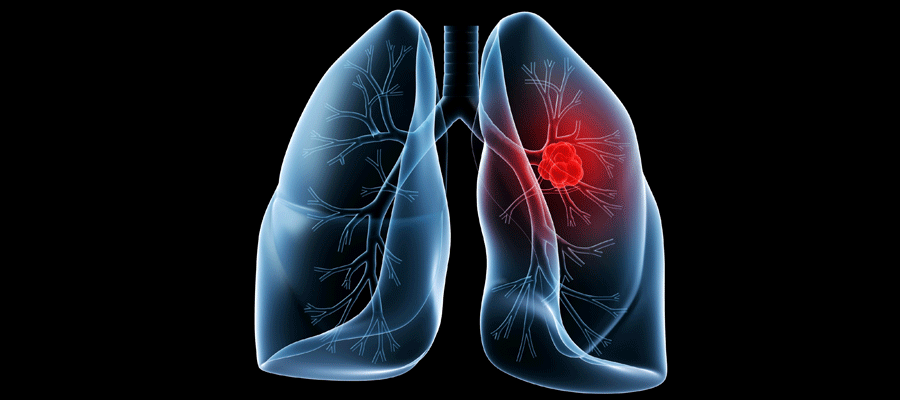
Quality of life in lung cancer – EORTC brings the measurements up to date
24 Mar 2020
By Mary Rice, EORTC Communication consultant
In a paper1 published today (Tuesday 24 March) in The Lancet Oncology, researchers from 19 hospitals across 12 countries update the EORTC protocol for quality of life (QoL) in lung cancer patients, first published in 1994. The original lung cancer questionnaire module, EORTC QLQ-LC13, is the standard in the field and has now been used in hundreds of clinical studies.
Quality of life assessment is increasingly important in oncology, not just in order to help understand patients’ needs and responses to treatment, but also as a measure of the effectiveness of treatment. The advent of new and innovative therapies has meant that many of the old QoL measures are not adapted to cope with the new efficacy criteria or with new side effects.
“The situation has changed considerably since 1994,” says Professor Michael Koller, from the University Hospital Regensburg, Regensburg, Germany, who led the new study. “The promising new treatment options that have emerged in recent years, such as targeted therapy and immunotherapy, come with new efficacy criteria but also with new side effects. These include dizziness, splitting fingernails, and allergic reactions, among others. Furthermore, many of today’s patients are treated according to a multimodal regime that also includes thoracic surgery. The new QoL module also includes a surgical subscale that addresses these specific side effects, for example pain or sensitivity in the area of the wound.”
Between April 2016 and September 2018, 523 patients with a confirmed diagnosis of either non-small-cell lung cancer or small-cell lung cancer were recruited to the study. During a hospital visit, they were asked to fill in a QoL questionnaire. Half of them were then asked to fill in the same questionnaire two to four weeks later. “From these results, we were able to study the utility of the new questionnaire,” says Prof Koller.
Lung cancer generally has a poor prognosis, even though the five-year relative survival rate for all types of lung cancer has increased from 10.7% to 19.8% in the past four decades. This progress can be attributed to a number of factors including early detection, molecular characteristics, staging, surgery, radiotherapy, and systemic therapies. Given that a good QoL is a major goal of treatment, along with survival, it is clearly important that this can be quantified.
“Governments are starting to collect QoL data not only from cancer clinical trials, but also from patients undergoing standard hospital care. This can not only help health services understand patients’ needs, but also allow for QoL mapping across countries and perhaps even more widely”, says Dr Andrew Bottomley, EORTC Assistant Director and Head of the Quality of Life Department, a co-author of the study.
Recent research from the EORTC has shown that QoL can be important in predicting the outcome of disease; can be important in predicting the outcome of their disease, say researchers from the EORTC. Until recently, reports from clinicians on issues such as patient age and tumour status were used primarily in determining prognoses, but now researchers have shown conclusively that patient-reported outcomes (PROs) have considerable value in predicting survival. “This means that patients can be better able to adapt their lives to the impact of the cancer diagnosis on their survival” says Prof Koller.
“The most important thing now is that international clinical studies should apply the new updated QoL module and further demonstrate its performance in the real-life setting of trials.”
Michael Koller; Omar Shamieh; Marianne J Hjermstad; Kjersti Hornslien; Teresa Young; Tara Chalk; Georgios Ioannidis; Amelie Harle; Colin D Johnson; Krzysztof A Tomaszewski; Samantha Serpentini; Monica Pinto; Lotte van der Weijst; Annelies Janssens; Ofir Morag; Wei-Chu Chie; Juan I Arraras; Cecilia Pompili; Wolfgang Jungraithmayr; Marlene Hechtner; Despina Katsochi; Karolina Müller; Laura Gräfenstein; Christian Schulz; Andrew Bottomley; On behalf of the European Organisation for Research and Treatment of Cancer (EORTC) Quality of Life Group, EORTC Lung Cancer Group, and European Society of Thoracic Surgeons.
Related News
Pink October 2026: Advancing breast cancer research, together
7 Oct 2026
Beyond survival: new CSO and EORTC recommendations call for better reporting of quality of life in adjuvant cancer trials
30 Sep 2026
EORTC presents new results in neuro-oncology at EANO
28 Sep 2026
In Memoriam: Neil Aaronson, founding member of the EORTC Quality of Life Group
7 Sep 2026
New EORTC perspective calls for patient preferences to become a standard part of cancer trials for older adults
4 Sep 2026
New EORTC questionnaire sets a global standard for measuring quality of life in cancer survivors
25 Aug 2026
EORTC calls for a balanced and feasible European Health Data Space (EHDS)
8 Jul 2026
Professor Benjamin Besse becomes President of EORTC
26 Jun 2026
CCTG, EORTC and UK3CR welcome G7 commitment to accelerate global progress against cancer
24 Jun 2026
EORTC welcomes EU Biotech Act and calls for refinements to enable patient-centred trials
24 Jun 2026