
frince

About Frédéric Rince

This author has not yet filled in any details.
So far Frédéric Rince has created 543 blog entries.

Dr. Warren Grant completes 2012 – 2013 EORTC Emmanuel van der Schueren Fellowship

Each year the EORTC offers an Emmanuel van der Schueren Fellowship to a promising early career scientist involved in radiation therapy quality assurance (RT QA). This Fellowship, supported by the Vlaamse Liga tegen Kanker, provides a unique opportunity to conduct radiation oncology research under the mentorship of members of the EORTC Radiation Oncology Group. For 2012 - 2013, Dr. Warren Grant was the EORTC Emmanuel van der Schueren Fellow.

Measuring the Quality of Life of Patients with Cancer

What is quality of life? Clinical trials have long been dominated by clinically based endpoints, but research has proved that health-related quality of life (HRQOL) can only be captured accurately by patients themselves using patient reported outcomes (PROs).


Cancer Survivorship: A Positive Side Effect of More Successful Cancer Treatment

Over the past decades, survival rates of cancer patients have increased impressively through the introduction of screening, new drugs and more personalised multi-modality treatments. This success in treating cancer has resulted in a large and rapidly increasing number of cancer survivors. Unfortunately, now that cancer is controlled in many patients, it has become clear that the life expectancy and quality of life of cancer survivors may be compromised by a spectrum of late adverse treatment effects.

By |2013-12-04T16:49:27+01:004 Dec 2013|, , |0 Comments

Quality of Life in Oncology Resource Centre

To optimize quality of life in oncology patients preventive measures to avoid occurrence of adverse effects of the disease and its treatment are required. Where prevention is not feasible, proper management to minimize both physical and psychological adverse effects is needed. By maximizing the patient’s quality of life patient resilience is enhanced, supporting acceptance, rehabilitation, compliance and generally easing the significant emotional burden of both patients and care givers.

By |2013-11-29T14:20:45+01:0029 Nov 2013|, |0 Comments

EORTC Cancer in the Elderly Task Force asks how we can determine appropriate treatment for elderly patients with cancer

As we age, we experience a progressive decline in many of our bodily functions. This decline can vary greatly from individual to individual. One 75 year old might still be very active and participate in strenuous physical activities, while another might require considerable assistance just to perform simple everyday tasks. Aging is variable. It is a highly individualized process that is influenced by a number of genetic, developmental, and environmental factors.

EORTC head & neck cancer trial shows assessing HRQOL is valuable to both patients and their doctors

In Europe in 2012, there were an estimated 39,900 new cases of laryngeal cancer and 99,600 new cases of oral cavity and pharyngeal cancers (Feraly et al.). The estimated number of deaths from laryngeal and oral cavity and pharyngeal cancers were 19,800 and 43,700, respectively. These types of cancers can negatively affect the health related quality of life (HRQOL), because they induce symptoms that may interfere with daily life.

EORTC phase II trial opens for patients with differentiated or medullary thyroid cancer progressing after first line therapy

Thyroid cancer is the most common endocrine malignancy. Its incidence has been increasing over the past three decades, and the age and gender-adjusted incidence has increased faster, in all ethnic backgrounds, than that of any other malignancy in recent years (Globocan). In Europe in 2008, there were nearly 50 000 new cases of thyroid cancer and roughly 6000 deaths, and treatment options for patients with advanced differentiated and medullary thyroid cancer who have progressed on one line of therapy are limited.

By |2017-06-30T09:20:21+02:0015 Nov 2013|, |0 Comments

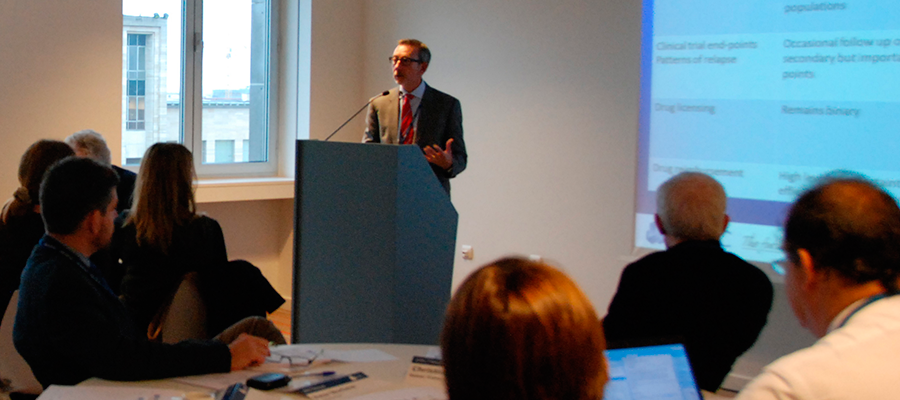
EORTC hosts first SPECTAforum, Screening Program for Efficient Clinical Trial Access, in Brussels

The first European multi-stakeholder model to address biomarker based drug development and promote innovative partnership successfully gathered in Brussels on 07 November 2013.  The meeting convened circa 80 selected representatives of patient groups, academic researchers, regulators, government, European Union commission, pharmaceutical industry sector, and diagnostic and technology companies alongside EORTC officers and representatives.

By |2013-11-14T15:15:44+01:0014 Nov 2013|, , |0 Comments

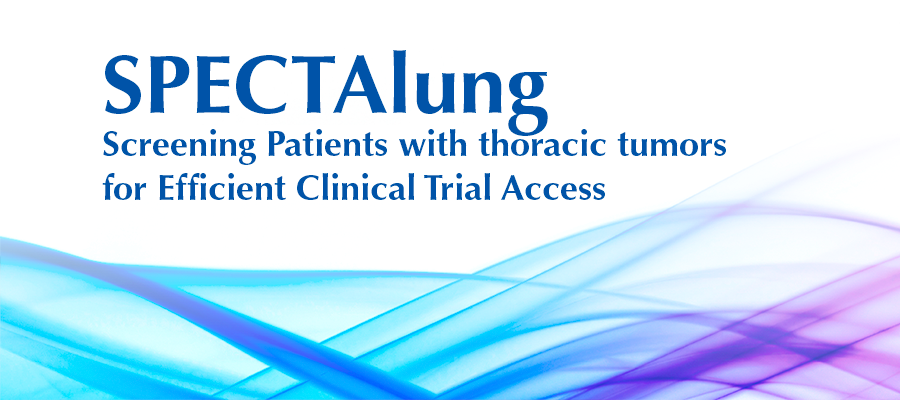
EORTC putting together SPECTAlung for patients with lung cancer

The EORTC has announced that it will build a Screening Program for Efficient Clinical Trial Access for patients with lung cancer. This program, SPECTAlung, will prospectively collect biological materials from patients who have been diagnosed with lung cancer, starting with non-small cell lung cancer (NSCLC) and enable efficient clinical trial access for these patients.

EORTC conducting phase III trial for patients with gastro-esophageal junction and stomach cancer

Worldwide, gastric cancer is a leading cause of cancer-related deaths. The current five-year survival rate for gastric cancer in developed countries is only about 20-30%. More alarming, however, is that even though the incidence of gastric adenocarcinoma has been decreasing, the incidence of adenocarcinoma of the esophagus and of the gastro-esophageal junction has been increasing over the past forty years.

Go to Top